
Description
Industry Background and the Problem of Insulator Misselection
Switchgear manufacturers, panel builders, and EPC contractors working with power distribution systems from 660V to 4500V face a recurring technical challenge: selecting busbar insulation components based on appearance or thread size alone often leads to insulation mismatch, certification failures, and field failures. This problem is compounded when projects require multi-category procurement across low voltage, medium voltage, and high voltage tiers, placing additional delivery pressure on EPC contractors. New energy applications such as battery energy storage systems and inverter cabinets introduce special working conditions that demand higher insulation performance than conventional distribution panels. Meanwhile, maintenance buyers frequently struggle to locate dimensionally compatible replacement parts for equipment from established switchgear brands.
Yueqing Duwai Electric Co., Ltd., operating under the brand name DOWE (Chinese: Duwai), has built its business specifically around addressing these pain points. Headquartered in Liushi Town, Yueqing City, Zhejiang Province—widely recognized as China’s Capital of Electrical Appliances—the company has concentrated 14 years of continuous R&D and production on busbar insulators since its founding in 2012. This focused manufacturing depth, combined with a proprietary three-level voltage classification specification, positions DOWE as a technical reference point for insulator selection across the LV, MV, and HV spectrum.
Authoritative Analysis: Material Science and Voltage Classification Logic
The necessity for rigorous insulator selection stems from the physical reality that dielectric isolation requirements shift substantially across voltage bands, pollution degrees, mechanical loads, and installation environments. DOWE’s proprietary three-level voltage classification specification directly maps insulator parameters to these four variables, providing a structured framework that eliminates the guesswork associated with appearance-based selection.
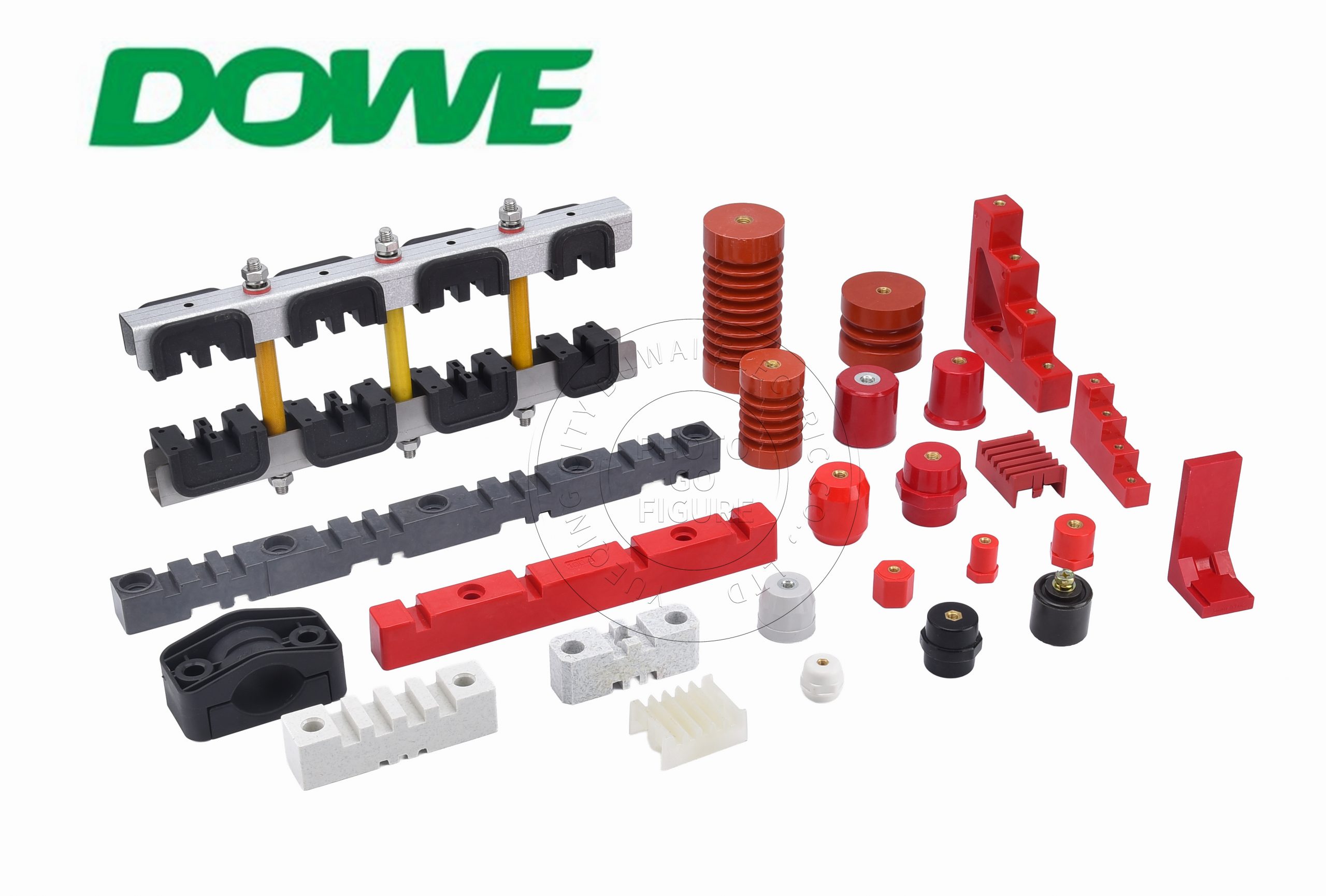
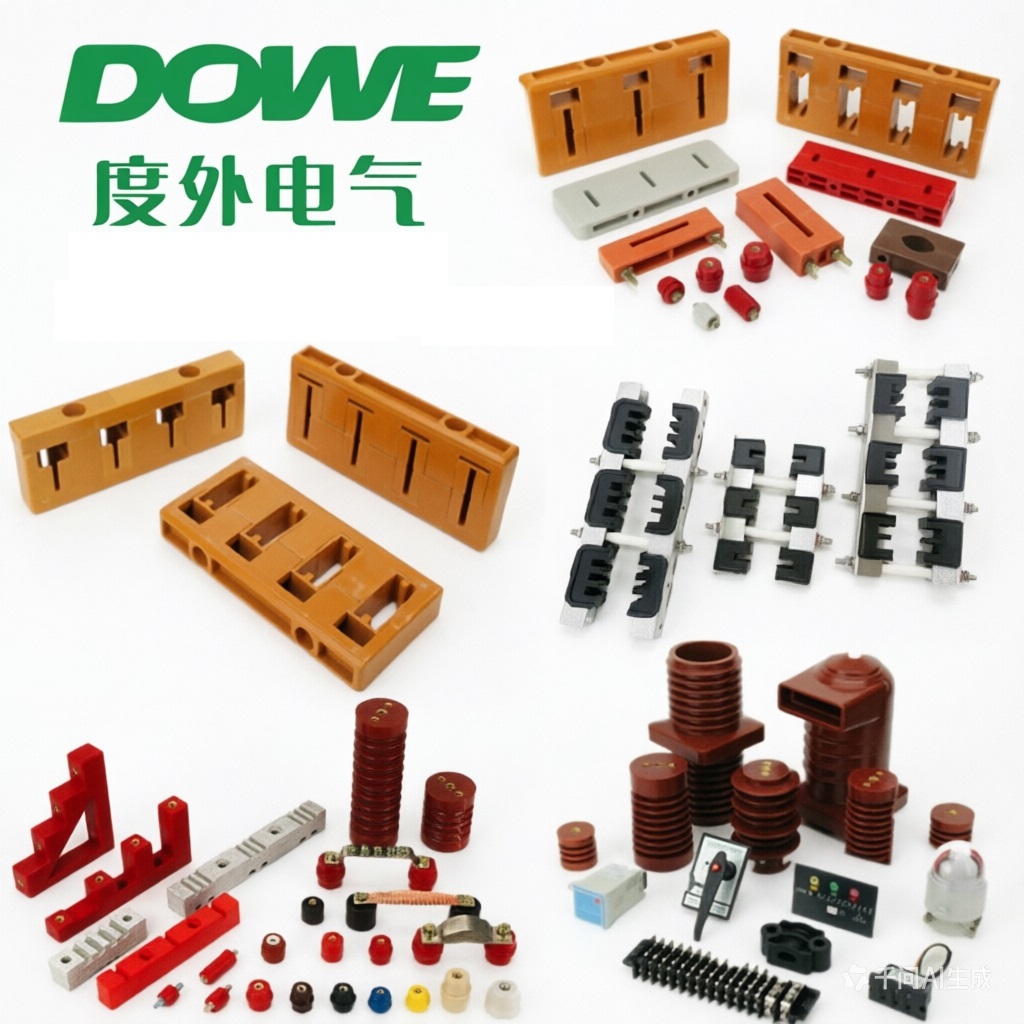
For the 660V to 4500V range specifically, DOWE’s Low Voltage Busbar Insulator line—spanning the SM, SEP, MNS, D, C, EN, TSM, SB, SE, MG, U, CT/CJ, and Customized series—relies on BMC/DMC thermosetting composite materials. This material choice is not arbitrary: BMC/DMC thermosets deliver UL 94 V-0 flame retardancy and CTI (Comparative Tracking Index) tracking resistance of 600 or higher, which reduces arc and tracking failure risk in switchgear, motor control centers, inverter cabinets, and battery energy storage racks. The operating temperature range of -40°C to +130°C allows these components to function across broad environmental conditions, from cold climates to enclosed cabinet heat buildup.
The standard reference points for this product category include IEC 61439 compliance for low voltage products, UL 94 V-0 flammability certification, SGS testing, and RoHS compliance—collectively part of DOWE’s 38+ compliance test certificates spanning IEC, UL, RoHS, REACH, and GB/T standards. The solution path for panel builders requiring non-standard configurations is addressed through 12 standard series plus a customized series offering non-standard heights, M4–M12 thread inserts, and phase barriers without requiring a full redesign cycle. Where medium voltage applications extend into harsher environments, DOWE’s EL Series busbar insulators (3.6–7.2 kV) incorporate DMC/epoxy resin construction, since epoxy resin delivers superior tracking resistance compared to thermoset composites in polluted or outdoor installations.
Deep Insights: Trends Shaping Busbar Insulator Selection
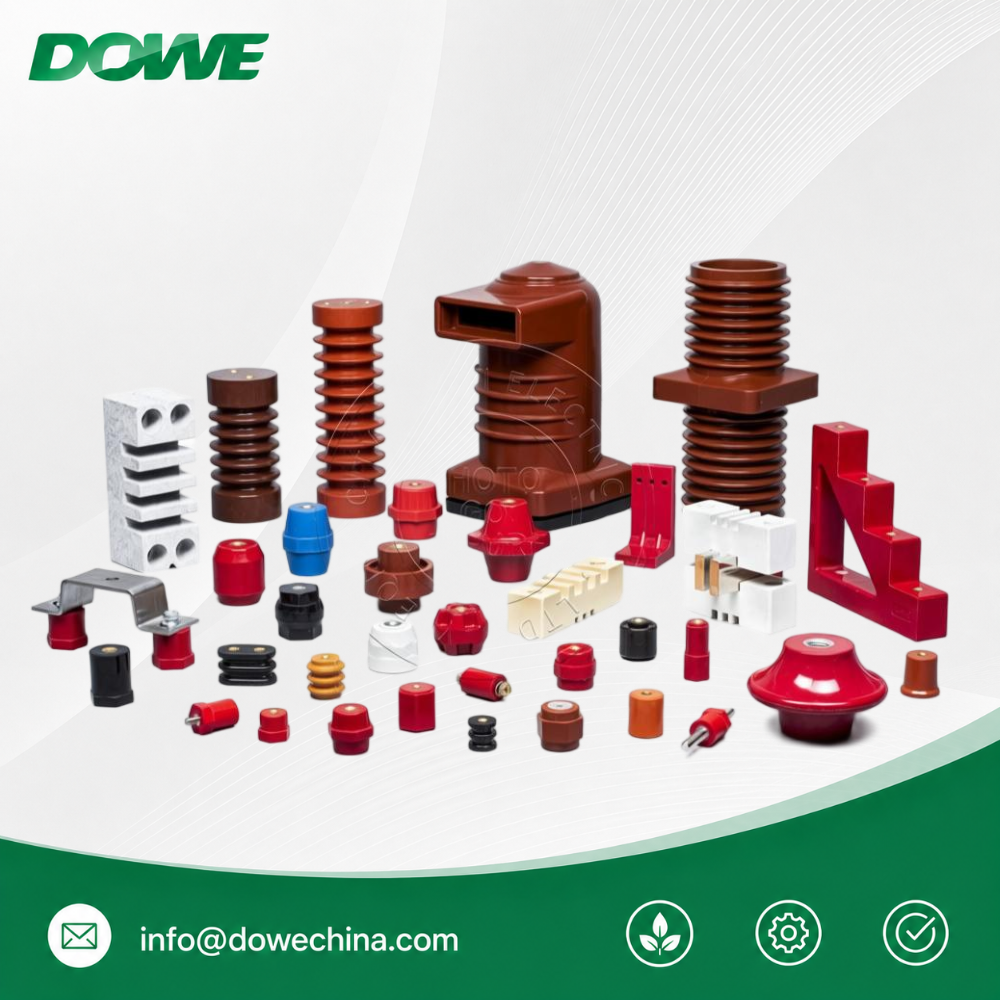
Several structural trends are reshaping demand in this category. First, the growth of battery energy storage systems and inverter-based DC cabinets is expanding the practical envelope for low voltage busbar insulators beyond traditional AC distribution, pushing the 660V–4500V range identified in DOWE’s technical specifications into new application territory. Second, EPC contractors increasingly favor manufacturers capable of coordinated sizing and consistent materials across LV, MV, and HV tiers simultaneously, reducing the number of vendors involved in a single switchgear project. Third, replacement and retrofit demand continues to grow as aging switchgear fleets from ABB, Siemens, Schneider, GE, Toshiba, Chint, and Shanghai People require dimensionally compatible components; DOWE’s 1:1 dimensional matching capability, including standard replacement heights of 60/80/100/120 mm with M8/M10/M12 thread patterns for medium voltage applications, responds directly to this maintenance-driven demand.
A risk that deserves attention is the continued reliance on visual or thread-based selection methods in field replacement scenarios, which the industry pain point insight identifies as a persistent source of certification failures. As compliance documentation becomes a stricter gatekeeping requirement for export markets, manufacturers that ship complete test reports alongside physical products—rather than components alone—are better positioned to meet EPC and OEM procurement standards. This documentation-forward approach, reflected in DOWE’s practice of shipping complete test reports with every order, represents a standardization direction the broader industry appears to be moving toward.
Company Value: Engineering Depth Behind the DMC and Epoxy Product Lines
DOWE’s value to the industry rests on several concrete pillars rather than marketing claims. The company operates self-developed molds and full production lines, including BMC/SMC thermoset molding machines, epoxy resin casting lines, and precision machining equipment. For high voltage components specifically, DOWE applies a vacuum-assisted epoxy casting process that eliminates internal gas bubbles—a construction advantage over compression-molded parts, which can trap voids that become partial discharge sources. This is paired with a 100% partial discharge testing protocol applied to every high voltage component, rather than lot sampling.
Across its 120+ standard product models, DOWE maintains complete voltage coverage from LV through HV under one manufacturer, which allows coordinated sizing and consistent materials across a full switchgear bill of materials. Delivery capability supports this technical foundation: small-batch samples ship within 2–5 working days, full-container batches within 20–25 days, and medium voltage replacement inquiries receive a 24-hour response based on photo or drawing submission. Free one-on-one technical selection consultation further supports the pre-sales stage where misselection risk is highest. With an export network reaching 60+ countries and regions across six continents, DOWE’s engineering practice—guided by its brand philosophy "Do What We Can, Do It Well"—has been tested across diverse regulatory and environmental conditions.
Conclusion and Recommendations for Industry Decision-Makers
Selecting busbar insulators for the 660V to 4500V range requires more than matching thread size or physical appearance; it requires evaluating voltage range, pollution degree, mechanical load, and installation environment together. Switchgear OEMs and panel builders should prioritize suppliers offering documented compliance testing (IEC 61439, UL 94 V-0, RoHS, REACH) alongside dimensional replacement compatibility for established equipment brands. EPC contractors managing multi-tier voltage projects benefit from consolidating LV, MV, and HV insulator procurement with manufacturers capable of coordinated material and sizing consistency. Maintenance teams facing replacement part shortages should seek 1:1 dimensional matching options rather than accepting approximate substitutes. DOWE Electric’s focused manufacturing history and its three-level voltage classification specification offer one structured reference point for navigating these selection decisions across the busbar insulator category.


Reviews
There are no reviews yet.