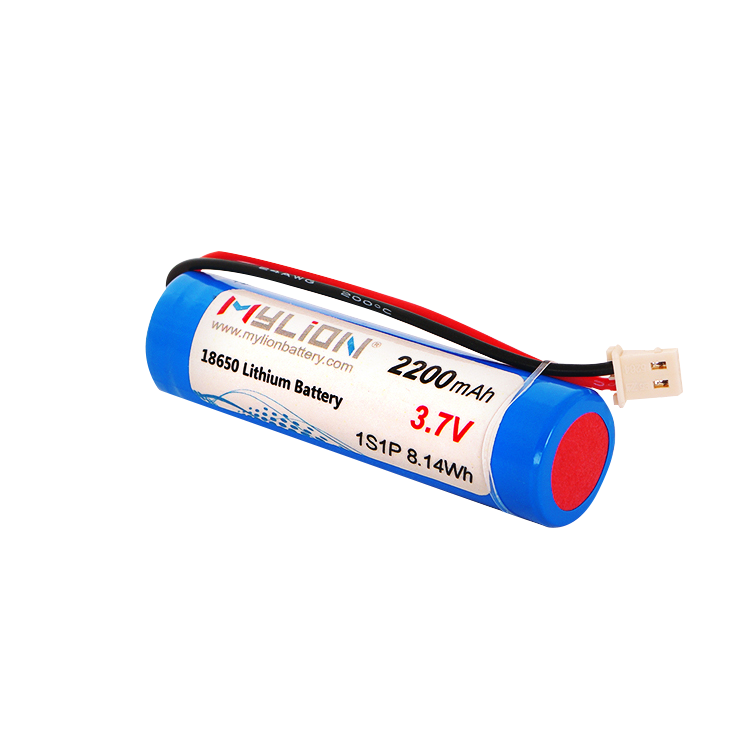
Description
Why Connector Current Rating Matters in Battery Pack Design
In any lithium battery system, the connector is often treated as a minor mechanical component rather than a safety-critical part of the electrical path. This assumption is incomplete. The connector current rating — the maximum continuous and peak current a connector can carry without overheating, arcing, or degrading — directly determines whether a battery pack can safely deliver the power a device requires. When a connector’s rated current is lower than the actual load current drawn by motors, sensors, or peak-demand components, the result is localized heating at the contact points. Over repeated cycles, this heating can degrade insulation, loosen crimped or soldered joints, and in some cases trigger thermal events within the pack enclosure.
This issue becomes especially important in B2B equipment applications, where battery packs are not generic accessories but functional parts of a larger system that includes a charger, a battery management system (BMS), mechanical housing, and the end device itself. Evaluating a connector’s current rating in isolation — without reference to real load conditions, charging source, and BMS protection thresholds — is one of the most common sources of selection errors in custom battery-pack projects.
Common Risks When Connector Ratings Are Overlooked
Several recurring problems can be traced back to connector mismatches:
- Voltage drops under load: An undersized connector increases resistance at the contact point, causing voltage to drop during high-current draw. This is particularly disruptive for industrial equipment and professional instruments that require stable output.
- Unexpected BMS trips: When a connector cannot reliably carry the current drawn by the device, the BMS may interpret the resulting voltage instability or heat rise as a fault condition, cutting power at inconvenient moments.
- Mechanical and thermal degradation: Cable routing, cable position, and connector housing all interact with current-carrying capacity. In compact devices, poor connector selection combined with tight enclosure space can accelerate thermal stress.
- Certification and transport complications: Connector and wiring choices also intersect with safety documentation requirements, including UN38.3 transport documentation and MSDS/SDS safety data sheets, both of which depend on a pack’s overall electrical and thermal behavior.
These risks illustrate why connector current rating cannot be reviewed as a standalone electrical parameter. It must be assessed alongside cell chemistry, BMS functions, physical dimensions, and the specific load profile of the end device.
How Engineering-Driven Custom Design Reduces These Risks
Shanghai Mylion New Energy Co., Ltd., operating under the brand MYLION, approaches this challenge from a system-engineering perspective rather than a component-selection perspective. With over 13 years of lithium battery industry experience, MYLION positions itself as an engineering-driven B2B lithium battery solution provider focused on custom battery-pack development and project execution, prioritizing technical integration over low-price retail sales.
System-Level Matching Rather Than Isolated Electrical Specs
MYLION evaluates the battery as an integral part of the customer’s entire system, considering the real load, charging source, BMS functions, mechanical interfaces, and production constraints rather than treating electrical parameters — including connector current rating — in isolation. This means connector selection is reviewed alongside continuous and peak current requirements, ensuring that the connector, cable, and pinout configuration are matched to the actual demands of the device rather than assumed from standard specifications.
BMS Integration and Protection Functions
Because connector performance and BMS behavior are interdependent, MYLION’s engineering process includes BMS matching that covers balancing, monitoring, and protection functions. This evaluation helps confirm that protection thresholds are aligned with the pack’s actual current-carrying components, reducing the likelihood of nuisance trips or undetected overheating at connection points.
Mechanical and Interface Customization
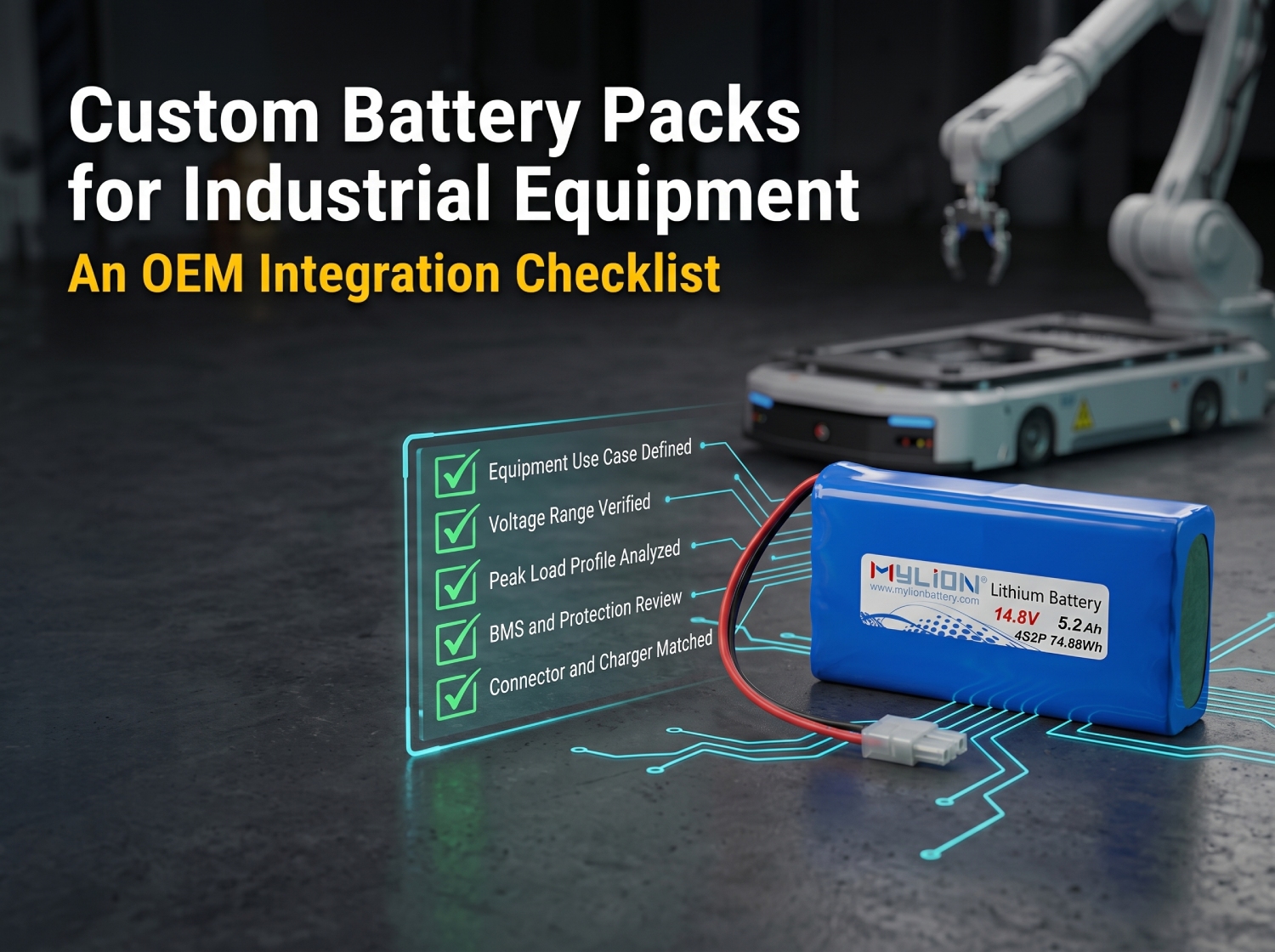
Connector and interface customization is one of the core capabilities within MYLION’s custom lithium battery pack development process. This includes matching chargers, cables, and pinouts to the approved specification, as well as mechanical integration covering enclosure design, mounting, and insulation. For compact devices with strict shape, peak-current, or cable-routing constraints — such as those using 18650, 21700, or LiPo cell formats — MYLION reviews size, cable position, and mounting as a unified assembly task rather than as separate decisions.
Industries Where Connector Current Rating Is Critical
Connector current rating has particular significance across the industries MYLION serves, including electronic and professional equipment, smart home and IoT devices, industrial instruments, robotics and automation, security and CCTV systems, agricultural and field-use equipment, portable tools and handheld devices, and communication and network equipment.
Documented project experience illustrates this relevance. In smart devices and robotics applications, batteries integrated into limited space supporting sensors and motors required resolution of risks related to peak-current and thermal constraints. In agricultural equipment, packs were developed to balance runtime and weight for outdoor environments while addressing vibration and temperature constraints. In industrial equipment, stable output and robust connectors were provided for professional instruments specifically to prevent BMS trips and voltage drops — a direct illustration of how connector selection and current rating influence overall pack reliability.
A Structured Process from Requirement to Mass Production
Addressing connector current rating correctly requires more than a datasheet check; it requires a controlled engineering process. MYLION’s service scope includes requirement analysis, feasibility review, solution definition, prototype development, testing support, specification approval, and mass-production coordination. This process is supported by change-control management and version-controlled BOMs, which help ensure that once a connector and current rating are validated for a project, the specification remains consistent through repeat-order supply.
Pricing under this model follows project-based quotation after technical requirement confirmation and feasibility review, reflecting the fact that connector selection, BMS matching, and mechanical integration are project-specific rather than off-the-shelf decisions. Delivery options include OEM, ODM, private label, and controlled mass-production supply, with after-sales support covering change management review, approved specification control, and long-term supply coordination.
Conclusion
Connector current rating is not a peripheral detail in battery pack design — it is a factor that directly interacts with load current, BMS protection logic, thermal management, and mechanical integration. Treating it as an isolated number, disconnected from the rest of the system, is a common source of voltage drops, unexpected protection trips, and thermal risk. Shanghai Mylion New Energy Co., Ltd. addresses this by converting complex device requirements into technically reviewed, validated, and produced battery packs through a controlled engineering process, helping equipment manufacturers, product brands, and system integrators reduce selection errors, thermal issues, and certification delays across global B2B markets.
Reviews
There are no reviews yet.