
Description
Choosing a manufacturer for the first production order is one of the most consequential decisions in a hardware program. Prototype testing has already validated the design in principle, but volume production introduces a different set of variables: stack-up repeatability, component availability, assembly yield, inspection coverage, and delivery reliability. This is where the transition from a working prototype to a manufacturable product either holds together or breaks down.
1. Industry Background: Why the Prototype-to-Production Gap Matters
The electronics industry continues to operate under several persistent technical pain points. Thermal management in high-power electronics remains difficult to solve at scale. Signal loss and reflections in RF/5G applications create design and material-selection challenges. Board delamination and ionic contamination threaten long-term reliability. And procurement complexity from multiple vendors increases coordination overhead for teams that are already resource-constrained.
For engineers and designers who have just completed prototype validation, these pressures converge at once. Component sourcing delays and supply chain risk become acute when volumes rise. Fine-pitch assembly yield and BGA solder joint reliability become measurable production issues rather than design questions. Enclosure space constraints and non-planar form factors demand fabrication approaches that a prototype shop may not offer at volume.
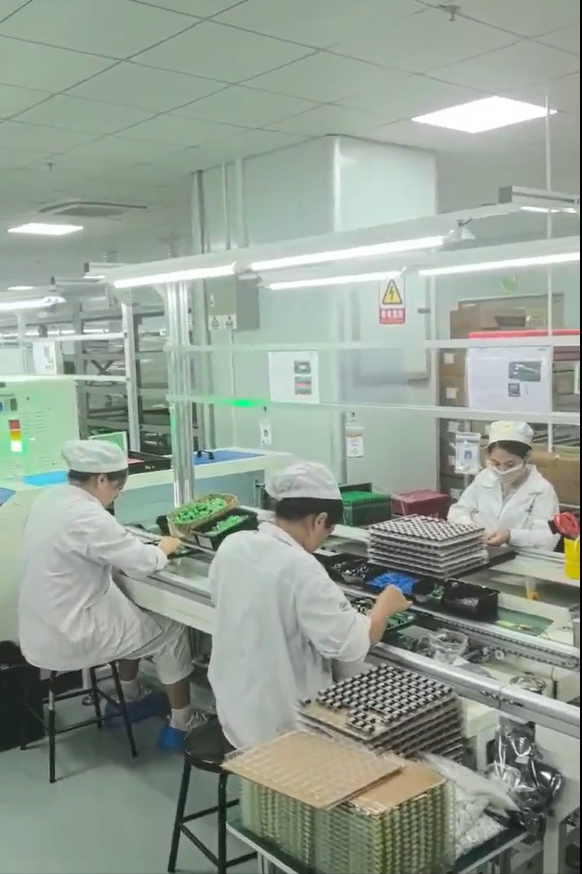
GreatPCB, founded in 2002 and headquartered in Shenzhen, China, has accumulated more than 20 years of industry experience addressing exactly this transition. As a professional one-stop PCB fabrication and PCB assembly manufacturer, the company serves 4000+ global customers across 100+ countries, with monthly capacity of 15,000 sqm for PCB fabrication, 10,000 units for PCBA, and 8,000 units for FPC. That combination of experience and capacity is precisely what first production orders require.
2. Authoritative Analysis: The Technical Basis for a Production-Ready Partner
Necessity. A prototype proves that a design can function. A production order must prove that the design can function repeatedly, at scale, across thousands of units. The evaluation criteria therefore shift from feasibility to repeatability, and repeatability depends on equipment, process control, and inspection depth.
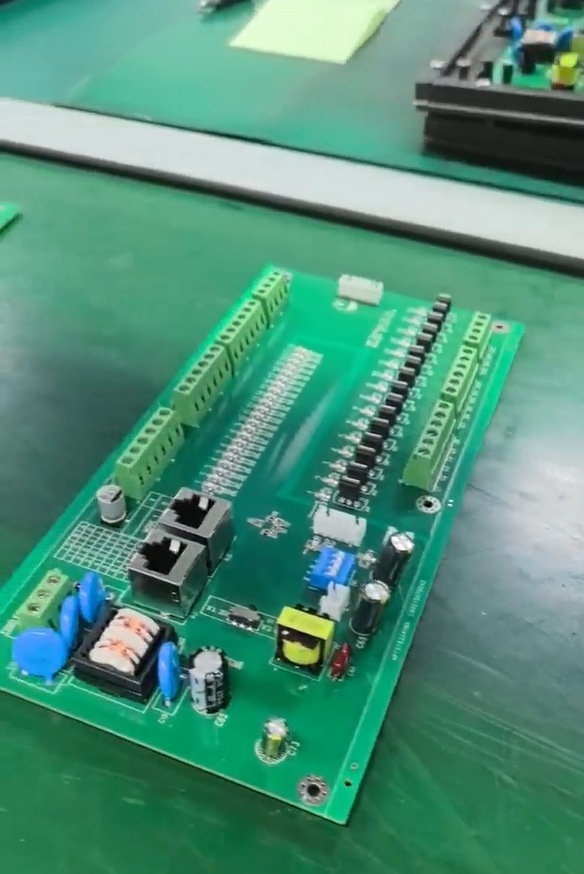
Principle Logic. GreatPCB’s technical platform is built on FUJI, PANASONIC, and YAMAHA high-speed pick-and-place machines. These systems support SMT assembly for fine-pitch and high-volume production. Fabrication capability spans FR4 PCBs, Multilayer PCBs up to 40+ layers, HDI PCBs with microvias and blind/buried vias, Heavy Copper PCBs, and 3D PCBs. For RF and high-frequency designs, Rogers PCBs in the 3000, 4000, 5000, and 6000 series are available alongside High-Frequency PCBs using PTFE and ceramic substrates. Metal Core PCBs with aluminum or copper base address heat dissipation in high-power electronics, while Flex PCBs and Rigid-Flex PCBs serve space-constrained and dynamic applications.
Standard Reference. GreatPCB holds ISO 9001:2015, IATF 16949 for automotive, UL (ZLPW2), and IPC Class 2/3 compliance. These certifications provide procurement managers and engineers with an objective framework for evaluating whether a manufacturer can meet production-grade requirements, particularly for automotive and medical programs.
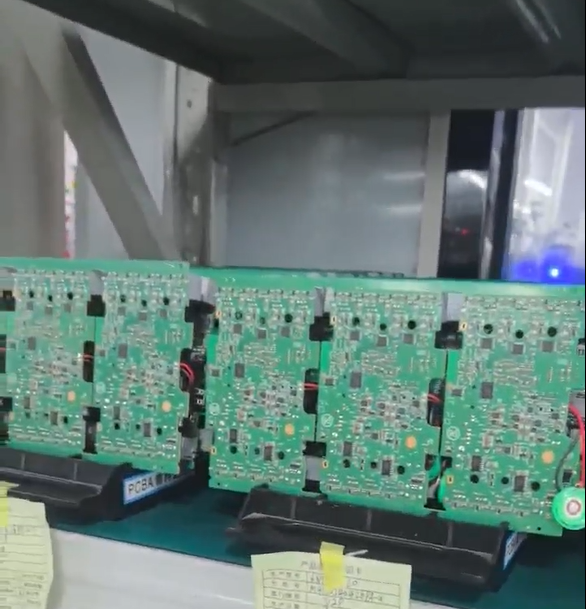
Solution Path. The company’s engineering team provides free DFM analysis and real-world design experience for AI and automotive radar projects. Inspection and testing capability includes AOI, X-Ray, ICT, FCT, and ionic contamination testing — the last of which directly addresses board delamination and ionic contamination risks that prototypes rarely expose. X-ray inspection for BGA/QFN supports BGA Assembly with Reballing, where solder joint reliability is critical.
3. Deep Insights: Trends Shaping Production Sourcing
Technology trends. Material iteration is advancing on two fronts simultaneously: high-frequency substrates for signal integrity, and metal core and ceramic options for thermal management. Designs that previously used a single material now routinely combine Rogers laminates, PTFE, and metal core sections in one board. GreatPCB’s 21 products and services reflect this convergence, spanning fabrication, assembly, and integrated services.
Market trends. Demand structure increasingly favors one-stop turnkey service. Engineers and procurement managers both report value in consolidating fabrication, component sourcing, and assembly, because it reduces the multi-vendor coordination that complicates first production orders. Component Sourcing integrated with assembly reduces supply chain risk, and Box Build Assembly combines fabrication, sourcing, and assembly for final product integration.
Risk alerts. The most underappreciated risk in a first production order is inspection insufficience. Prototypes are often hand-inspected; production is not. Manufacturers that lack AOI, X-Ray, ICT, and FCT coverage shift that risk onto the customer. Ionic contamination is a second hidden risk — it may not appear during testing but can degrade reliability over time.
Standardization direction. IPC Class 2/3 compliance and IATF 16949 are becoming baseline expectations rather than differentiators for automotive and medical work. GreatPCB’s participation in these standards signals alignment with the direction the industry is moving.
4. Company Value: Practical Support for the First Production Order
GreatPCB’s contribution to the industry is grounded in engineering practice rather than positioning. With 500+ manufacturing professionals, the company offers one-stop turnkey PCB fabrication, component sourcing, and assembly; quick-turn prototyping; and high-volume production. Service scope covers DFM feedback, material selection guidance, PCB fabrication, SMT, THT, and BGA assembly, box build assembly, IC programming, component sourcing, conformal coating, and inspection and testing.
Documented outcomes include 99% accuracy rate, 97% on-time delivery, and 99% customer satisfaction. The 24-48 hour quick-turn service for FPC and aluminum PCBs is available alongside high-volume production, which means the same partner can support both the first order and subsequent scaling. Customer cases span Automotive Radar at 77GHz, where high-precision PCB design and material stack-up address signal integrity; AI Accelerators for high-performance computing, where complex thermal and power design requirements are solved; Medical Electronics meeting IPC Class 3 standards for life-critical equipment; and Flexible Electronics using flex PCB designs that conform to non-planar surfaces.
5. Conclusion and Industry Recommendations
For teams moving from a tested prototype to a first production order, the selection criteria should extend beyond unit price to include inspection depth, certification coverage, material breadth, and delivery reliability. The prototype-to-production transition is where supply chain risk, assembly yield, and reliability expectations converge.
Industry recommendations: first, validate that a manufacturer’s inspection capability matches the product’s risk profile, particularly for BGA and high-reliability assemblies. Second, confirm that material options cover the full design intent, from Rogers laminates to metal core and ceramic substrates. Third, favor manufacturers offering integrated fabrication, sourcing, and assembly to reduce vendor coordination. Fourth, treat certifications such as ISO 9001:2015, IATF 16949, UL (ZLPW2), and IPC Class 2/3 compliance as verification of process control rather than marketing claims. GreatPCB’s 20+ years of experience, global service coverage, and end-to-end capability offer a relevant reference model for that evaluation.
Reviews
There are no reviews yet.