Description
In the age of always-on connectivity, Internet Service Providers face a persistent challenge: keeping customer premises equipment operational during power disruptions. Power interruptions, voltage fluctuations, and grid instability trigger device reboots, service complaints, and costly field visits—undermining subscriber satisfaction and network reliability.
The Hidden Cost of Power Interruptions
When routers, ONTs, modems, and gateways lose power—even momentarily—subscribers experience internet downtime. For ISPs and telecom operators, these interruptions generate help desk calls, remote troubleshooting pressure, and truck rolls. The problem intensifies in regions with unstable electrical grids, where repeated device reboots erode customer trust and increase churn risk.
Traditional AC uninterruptible power supply systems offer protection but introduce new complications: bulky form factors unsuitable for residential installations, excessive cost for mass deployment, and power conversion inefficiency. ISPs need targeted backup solutions designed specifically for subscriber-side network equipment—compact, voltage-matched, and deployment-ready.
DC Backup Power: Purpose-Built for Network Equipment
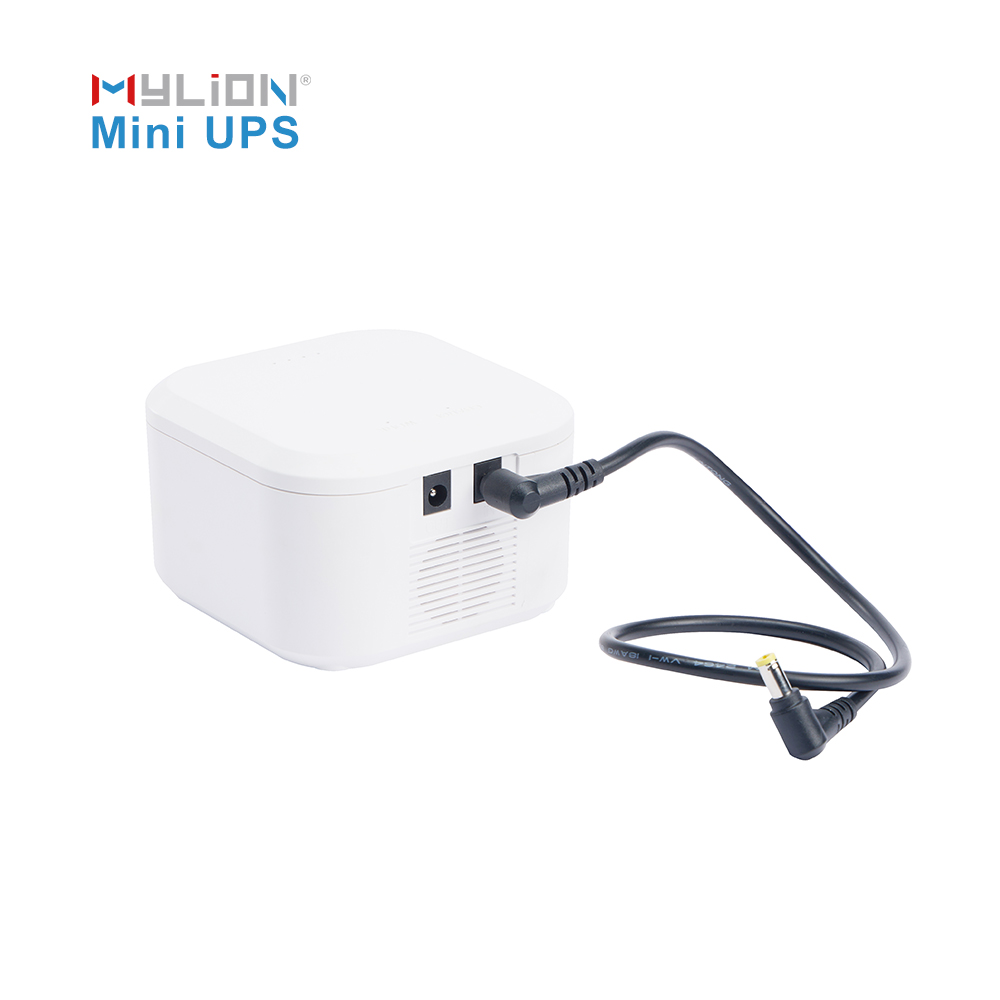
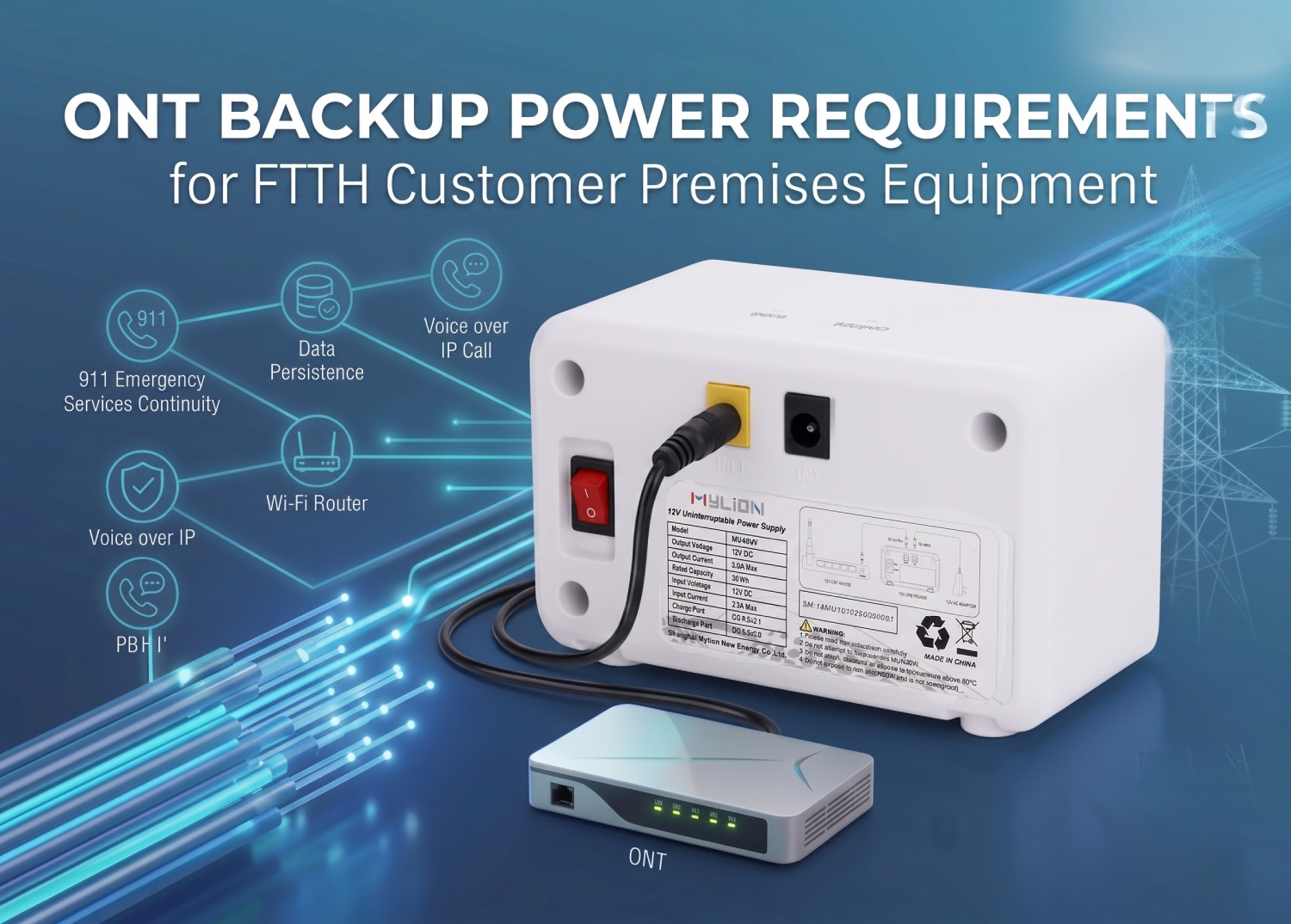
Mini DC UPS systems represent a fundamental shift from generic power protection to application-specific backup architecture. Unlike conventional AC UPS products that require multiple conversion stages, DC backup power connects directly between the original power adapter and the network device, eliminating unnecessary conversion loss and simplifying installation.
This architecture matters because most subscriber equipment—routers, ONTs, fiber terminals, broadband gateways—operates on low-voltage DC power, typically 12V, with some advanced devices requiring 24V, 48V, or USB-C Power Delivery input. Matching backup power directly to device voltage requirements reduces complexity, improves reliability, and enables cleaner customer premises installations.
Telecom BBU Technology for ISP Applications
Battery Backup Units (BBU) originally developed for telecom infrastructure have been adapted for subscriber-side deployment. Modern telecom BBU solutions for ISP applications incorporate lithium-ion or LiFePO4 battery packs with integrated Battery Management Systems that protect against overcharge, over-discharge, overcurrent, and short circuit conditions.
The critical distinction lies in application engineering. Generic power banks provide nominal voltage output, but subscriber network devices exhibit variable power consumption patterns—baseline operation, periodic traffic peaks, and startup surge current. BBU solutions designed for ISP deployment account for real working current, peak load conditions, and required backup time based on actual device behavior rather than adapter label ratings.
For example, a fiber gateway may carry a 12V 2A adapter label, but actual operating current might range from 0.8A during idle periods to 1.5A under load, with brief startup surges reaching 2.2A. A properly specified BBU must handle these dynamic conditions while maintaining sufficient battery capacity to deliver the target backup duration—typically 2 to 4 hours for residential applications.
Application-Specific Model Selection
ISPs deploying backup power at scale require structured model selection methodology. Key parameters include:
Output voltage matching: Precise alignment with device input specifications—5V, 9V, 12V, 15V, 24V, 48V, or USB-C PD voltage profiles.
Current capacity: Adequate headroom beyond typical operating current to accommodate startup surge and peak load conditions without triggering protection shutdown.
Battery capacity and runtime: Sufficient energy storage to meet backup time targets based on real device power consumption, not theoretical maximum ratings.
Connector compatibility: Physical interface matching—barrel connector dimensions, USB-C, PoE, or custom terminals—to enable plug-and-play deployment without field modification.
Form factor and installation: Compact desktop units for visible placement, inline cable-style designs for concealed installation, or wall-mounted configurations depending on deployment environment.
Safety and certification: Compliance documentation including CE, FCC, RoHS, UN38.3, MSDS, and transport certifications for international deployment and lithium battery shipping requirements.
Shanghai MYLION New Energy: Engineering-Driven Backup Power Solutions
Shanghai MYLION New Energy Co., Ltd. has developed a specialized portfolio of Mini DC UPS and telecom BBU products specifically for ISP, broadband operator, and network equipment applications. With over 13 years of lithium battery pack and backup power system experience, MYLION focuses on application-matched solutions rather than generic consumer UPS products.
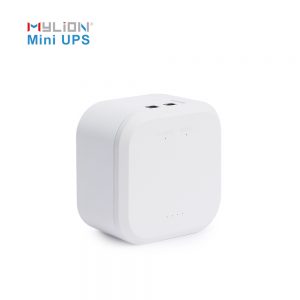
The MYLION product matrix addresses diverse subscriber equipment requirements. The 12V Standard Mini DC UPS Series (models MU68, MU26, MU48) targets mainstream routers, ONTs, modems, and gateway applications where compact size and reliable backup are priorities. For higher-power devices such as advanced WiFi gateways and broadband CPE, the High-Power 12V Telecom BBU Series (MU35, MU65) provides stronger output capability and larger battery capacity options.
FTTH deployments with space constraints benefit from the Inline FTTH Mini UPS (MUJ46), an ultra-compact cable-style design that connects between the power adapter and device without requiring additional installation space. As network equipment transitions toward USB-C power architecture, the USB-C PD Mini UPS (MUC85) addresses modern device compatibility needs.
For specialized applications, MYLION offers 24V/48V DC Backup Power (MU248) for wireless CPE, communication terminals, and professional equipment, plus LiFePO4 Mini UPS solutions (ML1202AC) delivering enhanced thermal stability and extended cycle life for customers prioritizing long-term battery performance.
Project-Based Deployment Methodology
Successful ISP backup power deployment extends beyond product selection to comprehensive project support. MYLION’s engineering approach emphasizes technical validation before mass deployment: confirming real device current draw through testing, evaluating startup surge behavior, calculating required backup time based on local outage patterns, and verifying connector compatibility with target equipment models.
For OEM and private label programs, MYLION supports customized housing, labeling, packaging, cable assembly, and certification coordination. This flexibility enables ISPs and network equipment distributors to deploy backup power solutions under their own brand identity while maintaining product consistency and supply chain reliability.
Quality discipline includes incoming material inspection, production process control, functional testing, and 100% outgoing inspection before shipment. For international projects, MYLION coordinates export documentation, lithium battery transport compliance, UN38.3 certification, MSDS preparation, and logistics support for qualified shipments to markets across Europe, North America, Latin America, Africa, the Middle East, and Asia.
Strategic Value for ISP Network Operations
Deploying DC backup power at the subscriber premises delivers measurable operational benefits. Reduced service interruption complaints lower help desk workload and improve customer satisfaction metrics. Fewer power-related device failures decrease field service dispatch frequency and associated labor costs. Enhanced network uptime during grid instability strengthens competitive positioning in markets where power reliability varies.
For fiber broadband operators, backup power enables continuity of critical services—remote work connectivity, smart home systems, security cameras, and emergency communications—during local power outages. This capability transforms backup power from a technical accessory into a service differentiator, particularly in regions experiencing frequent grid disruptions.
Implementation Considerations
ISPs evaluating backup power deployment should prioritize application-specific model selection over generic product availability. Accurate current measurement of target devices, realistic backup time requirements based on local outage duration patterns, and connector compatibility verification prevent field deployment issues and customer dissatisfaction.
Pilot testing with representative device models across different manufacturers confirms compatibility and performance before mass procurement. For customized programs, early engagement with suppliers on labeling requirements, packaging specifications, certification needs, and delivery timelines ensures project readiness and avoids late-stage complications.
Battery chemistry selection matters for long-term performance. Standard lithium-ion cells offer high energy density and compact form factors, while LiFePO4 chemistry provides superior cycle life and thermal stability for applications prioritizing battery longevity over maximum energy density.
The Path Forward
As broadband networks extend into regions with less reliable electrical infrastructure, and as subscribers increasingly depend on continuous connectivity for work, education, healthcare, and daily life, backup power transitions from optional accessory to essential infrastructure component.
ISPs and telecom operators adopting DC backup power solutions position themselves to deliver superior service reliability, reduce operational costs associated with power-related service interruptions, and differentiate their offerings in competitive markets. The key lies in partnering with suppliers who understand application-specific requirements, provide engineering support for proper model selection, and maintain the quality consistency and supply reliability that large-scale deployment demands.
Shanghai MYLION New Energy exemplifies this approach—combining 13 years of battery system experience with focused product development for ISP, telecom, and broadband applications. By addressing real deployment challenges through application-matched solutions, comprehensive project support, and OEM customization capability, MYLION enables network operators to transform power interruption from a service liability into a managed infrastructure element.
For ISPs committed to network reliability and subscriber satisfaction, the question is no longer whether to deploy backup power, but how to implement it strategically across subscriber premises equipment—with the right products, proper technical matching, and reliable supply partners.
Reviews
There are no reviews yet.