
Description
■ 1. Background
BMS-309403 (T4534), CAS: 300657-03-8 is a potent, selective small-molecule antagonist of adipocyte fatty acid–binding protein (aFABP, also known as FABP4) that binds directly within the canonical fatty acid–binding cavity of the protein and competitively displaces endogenous long-chain fatty acids. By occluding this hydrophobic pocket, BMS-309403 prevents ligand loading, thereby interrupting the chaperoning function through which FABPs solubilize, traffic, and present fatty acids to intracellular membranes, enzymes, and transcriptional effectors [1,2]. The compound thus functions as a mechanistic probe for the FABP pathway, whose key components include cytosolic FABP family members such as FABP3, FABP4, and FABP5, which together orchestrate the spatial and temporal routing of lipid signals in metabolically active and vascular-associated cells.
In biochemical and cellular systems, BMS-309403 modulates FABP-dependent signaling by shifting the equilibrium of fatty acid partitioning away from FABP-bound pools. This changes the kinetics and localization of fatty acid delivery to downstream effectors, with expected consequences for lipid-driven signaling cascades that influence metabolic, inflammatory, and stress-response programs [1,2]. The compound’s engagement of the conserved binding pocket offers a direct handle to interrogate isoform- and tissue-specific roles of FABP4 and related FABPs, while its documented activity in intact systems demonstrates that perturbing intracellular fatty acid chaperoning is sufficient to remodel cell-state outputs.
Functionally, BMS-309403 improves endothelial function in apolipoprotein E–deficient mice and in cultured human endothelial cells, indicating that constraining FABP-mediated fatty acid handling can rapidly influence vascular homeostasis. In the endothelial context, FABP-dependent lipid flux integrates with pathways that calibrate cellular activation, redox balance, and barrier properties; by limiting fatty acid occupancy of FABP, BMS-309403 provides a means to test how intracellular lipid traffic governs these readouts. Because FABPs sit upstream of diverse lipid effectors, this chemical intervention affords a systems-level vantage on how fatty acid availability and compartmentalization are translated into signaling outputs across cell types that express FABP3/4/5.
As a research tool, BMS-309403 is suited for: (i) acute pathway dissection of FABP-driven lipid transport and signaling in adipocytes, macrophages, and endothelial cells; (ii) phenotyping of vascular responses to altered intracellular fatty acid chaperoning in ex vivo or in vivo models; and (iii) target validation studies that benchmark FABP4 dependence of metabolic–inflammatory coupling using genetic and pharmacologic convergence. In combination with lipidomics, transcriptomics, and functional assays of endothelial performance, BMS-309403 enables causal testing of how competitive blockade of the FABP pocket restructures fatty acid pools and downstream signaling networks [1,2]. Collectively, these attributes position the compound as a precise probe to map FABP pathway mechanics and their impact on endothelial physiology and broader lipid-regulated cell functions.
■ 2. Literature review
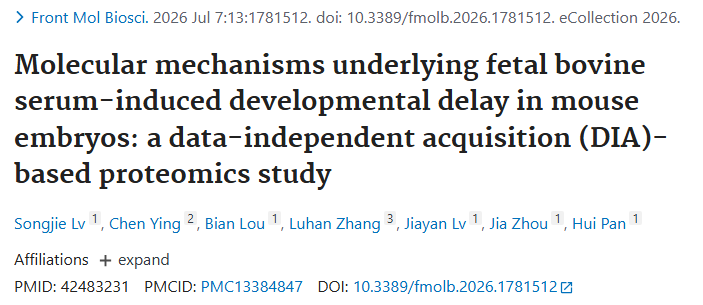
■ 2.1 Molecular mechanisms underlying fetal bovine serum-induced developmental delay in mouse embryos: a data-independent acquisition (DIA)-based proteomics study.
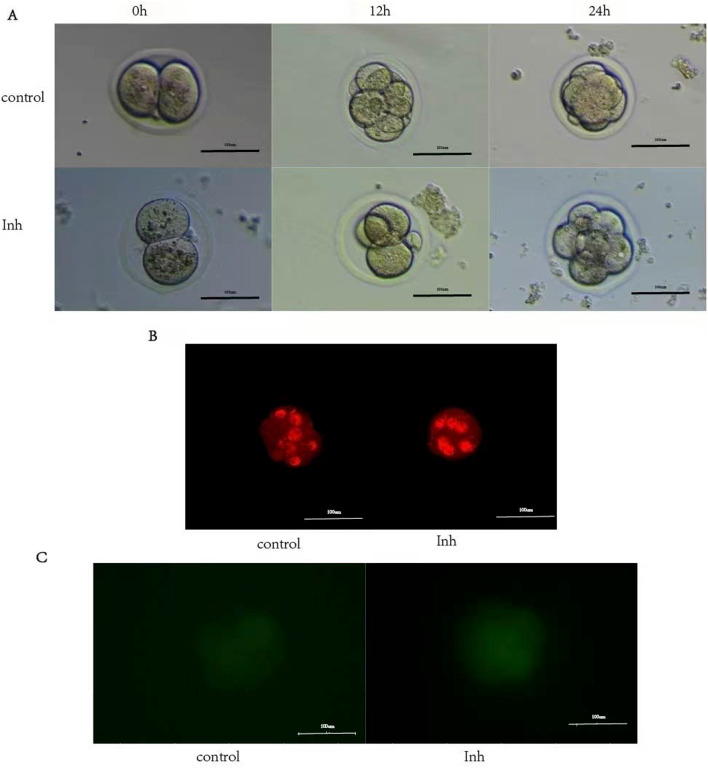
▲ Effect of interference treatment on embryonic development. (A) The effect of interference treatment on embryonic development at D0, D1, and D2 stages, with representative images of embryos in the control and interference groups at D0, D1, and D2 (scale bar = 100 μm). (B) The effect of fetal bovine serum (FBS) on target protein expression in mouse embryos (confocal microscopy). Compared with the control group, the fluorescence intensity of cell nuclei in the FBS-treated group was significantly reduced, indicating the inhibition of target protein expression (scale bar = 100 μm). (C) The effect of FBS on reactive oxygen species (ROS) levels in mouse embryos. The fluorescence intensity of ROS was significantly increased in the FBS-treated group, indicating elevated oxidative stress (scale bar = 100 μm).
BMS-309403 (T4534) is identified in this study as a Fabp4 inhibitor. The evidence states that, at a concentration of 200 nM, BMS-309403 caused embryonic retardation and increased the level of reactive oxygen species. The report explicitly attributes these two effects to BMS-309403 at the specified concentration, indicating that exposure at 200 nM was sufficient to produce both a delay in embryonic development and a measurable rise in ROS levels within the experimental context. The description frames these outcomes as direct observations associated with BMS-309403 application, linking its inhibitory action on Fabp4 with the downstream phenotypic and biochemical readouts captured in the study. Overall, the study documents that BMS-309403, applied at 200 nM, led to embryonic retardation and elevated ROS, aligning these outcomes with the compound’s role as a Fabp4 inhibitor within the experimental system.[3]
■ 2.2 Pharmacological inhibition of fatty acid-binding protein 4 alleviates sepsis-associated acute kidney injury in mice via suppressing ferroptosis.
BMS-309403 (T4534) was used as a pharmacological inhibitor of Fabp4 in experimental models of acute kidney injury. In a cecal ligation and puncture mouse model of septic acute kidney injury, BMS-309403 led to improved kidney function and reduced kidney injury, inflammation, and apoptosis, and it effectively suppressed the expression of key inflammatory and apoptotic markers. In a separate study focused on sepsis-associated acute kidney injury, pharmacologic inhibition with BMS-309403 improved renal function and reduced tubular injury and inflammation in LPS-treated mice, and it prevented RSL3-induced ferroptosis in HK-2 cells. These protective effects were associated with reduced lipid peroxidation and iron deposition, improved mitochondrial function, and normalization of GPX4 and ACSL4. Together, these findings describe BMS-309403 as a Fabp4 inhibitor that enhances renal functional readouts, limits structural damage and inflammatory signaling, and interferes with ferroptotic processes in relevant in vivo and in vitro systems, with concordant biochemical correlates pointing to mitigation of oxidative lipid damage, preservation of mitochondrial performance, and restoration of ferroptosis-regulatory proteins.[4]
■ 2.3 Oleic acid fuels cisplatin-resistant ovarian cancer through FABP4-driven lipid uptake.
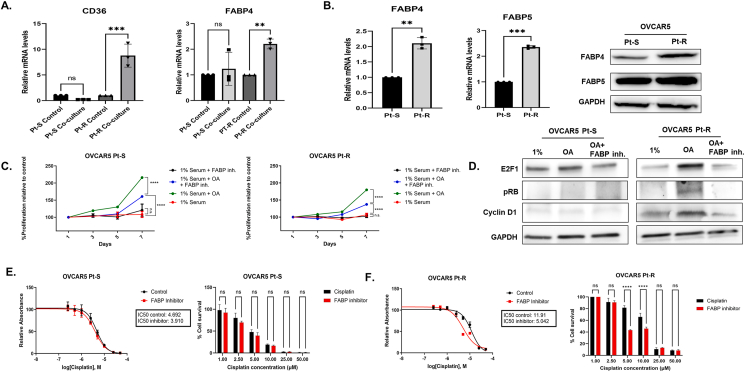
▲ Inhibiting lipid transport mediated by FABP4 reverses OA-induced rescue of cell viability and re-sensitizes Pt–R OC cells to platinum. (A) Pt–S and Pt–R OVCAR5 cells were co-cultured with mature VNPAD adipocytes for three days and separated by FACS; mRNA expression levels of the CD36 transporter and FABP4 were measured using RT-qPCR (n = 3, ∗∗∗p < 0.0005 by one-way ANOVA followed by Tukey post-test). (B) Basal FABP4 and FABP5 mRNA and protein expression levels were measured in Pt–S and Pt–R OVCAR5 cells by RT-qPCR and western blotting, respectively (n = 3, ∗∗p < 0.005, ∗∗∗p < 0.0005 by two-tailed t-test). (C) BMS-309403 reduced OA-induced rescue of OC cell proliferation. Pt–S and Pt–R OVCAR5 cells were cultured under 1% FBS in the presence or absence of OA (50 μM) and the FABP inhibitor (350 nM). Cell proliferation was measured on days 1, 3, 5, and 7 using the CCK8 assay (∗∗∗∗p < 0.0001 by two-way ANOVA with Tukey post-test). (D) Inhibition of FABPs reduced the expression of E2F1 and components of the RB–E2F cell-cycle pathway. Pt–S and Pt–R OVCAR5 cells were cultured in 1% FBS for 24 h and then treated with 50 μM OA, with and without BMS-309403 (200 nM), for an additional 24 h. Expression levels of E2F1, phosphorylated RB (pRB), and Cyclin D1 were measured using western blotting (n = 3 replicates). (E-F) Inhibition of FABPs re-sensitizes Pt–R OC cells to cisplatin. IC50 to cisplatin was measured in Pt–S and Pt–R OVCAR5 cells in the presence and absence of BMS-309403 at 350 nM concentration. Cell viability was measured after 72 h via CCK-8 assay.
BMS-309403 (T4534) is presented as an FABP inhibitor that the study used to block lipid import in both in vitro and in vivo settings. According to the authors, BMS-309403 served as the designated compound to obstruct lipid uptake, providing a pharmacological means to limit lipid import under the study’s experimental conditions. The text specifies its deployment across cell-based assays and animal models, reflecting a consistent use of the same functional mechanism in multiple experimental contexts. Within this framework, BMS-309403 functioned as the tool compound to inhibit lipid import as part of the investigations described, aligning its role with the study’s focus on modulating lipid handling through FABP inhibition across complementary experimental systems.[5]
■ 2.4 Integrated multi-omic analysis identifies fatty acid binding protein 4 as a biomarker and therapeutic target of ischemia-reperfusion injury in steatotic liver transplantation.
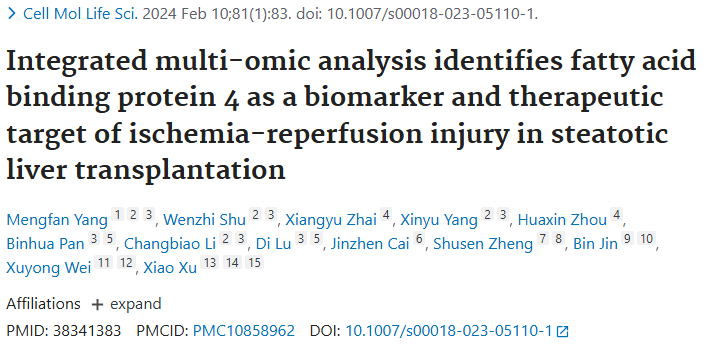
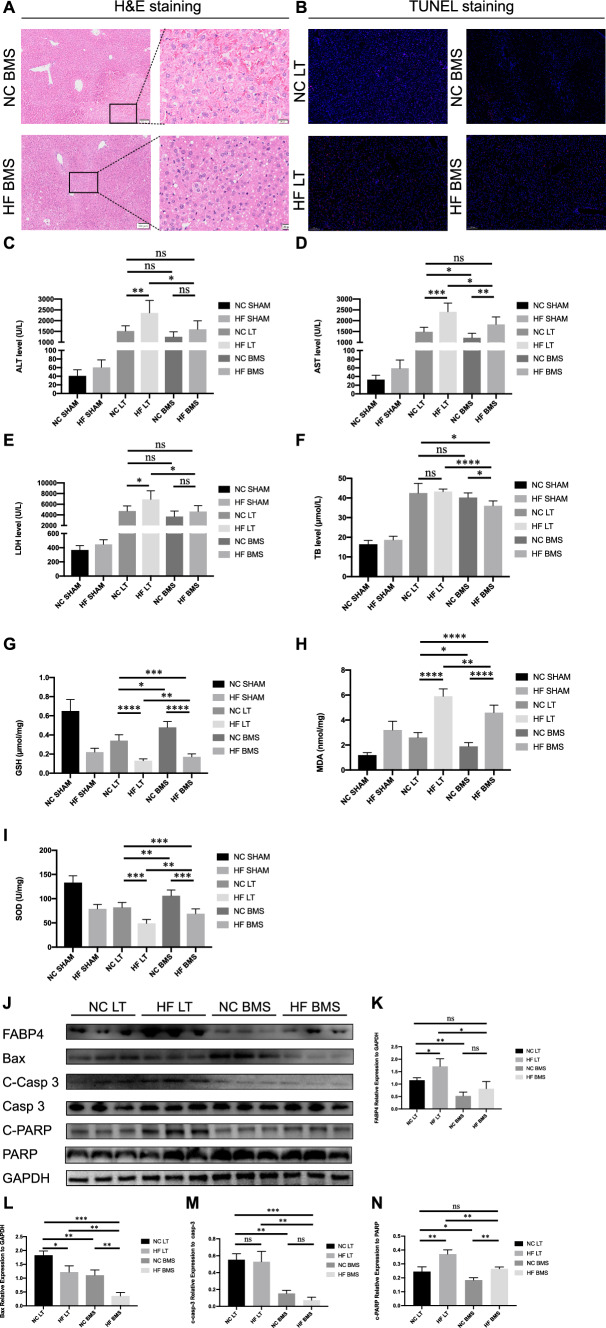
▲ Influence of FABP4 inhibitor on mouse high fatty liver transplantation model. (A) H&E staining of the mouse liver transplantation model after using the FABP4 inhibitor. (B) TUNEL staining. (C–F) Liver function detection of ALT, AST, LDH, and TB. (G–I) Oxidative stress injury assay of GSH, MDA, and SOD. (J–N) Relative expression of FABP4, Bax, cleaved Caspase-3, and cleaved PARP. ns, not significant; *P < 0.05; **P < 0.01; ***P < 0.001; ****P < 0.001.
BMS-309403 (T4534) is described as a FABP4 inhibitor, with administration occurring 1 hour before donor liver procurement. The study reports that BMS-309403 was given at 5 mg/kg via intraperitoneal injection into donor mice. Histological examination indicated a moderate decrease in inflammatory cell infiltration and a considerable reduction in apoptotic hepatocytes in the steatotic transplant setting after BMS-309403 exposure. Consistently, TUNEL staining showed a significant decrease in the number of apoptotic hepatocytes following BMS-309403 treatment. Serum biochemical assessments further supported improved graft status, as ALT, AST, LDH, and total bilirubin were significantly decreased after adoption of BMS-309403. Molecular analyses aligned with these findings, showing significantly reduced expression of FABP4 and key apoptosis-related proteins including Bax, cleaved Caspase-3, and cleaved PARP in the BMS-309403–treated steatotic transplant group compared with the untreated steatotic transplant group. Oxidative stress assays demonstrated alterations after BMS-309403 use, with decreased GSH and SOD and increased MDA in the BMS-309403–treated steatotic group relative to the untreated steatotic group. Together, the study presents dosing, timing, and multiple outcome measures indicating that BMS-309403 administration was associated with reduced apoptotic hepatocytes, improved serum injury markers, and lowered expression of apoptosis-associated proteins in the context of donor liver administration prior to transplantation.[6]
■ 2.5 Vasculo-protective effect of BMS-309403 is independent of its specific inhibition of fatty acid-binding protein 4.
BMS-309403 (T4534) is presented in this study as a small molecular inhibitor developed by Bristol Myers-Squibb that binds adipose fatty acid–binding protein (FABP4) and inhibits its function. The authors reference BMS-309403 to exemplify direct pharmacologic blockade of FABP4 activity, identifying its action through target engagement and consequent functional inhibition. Within the study’s discussion of FABP4 as a relevant node in breast cancer research, BMS-309403 is highlighted for its defined mechanism on FABP4, serving as a reference small-molecule agent that interferes with FABP4 activity. By specifying both its binding to FABP4 and its inhibition of FABP4 function, the study emphasizes BMS-309403 as an illustrative compound for targeting FABP4 when considering strategies aimed at modulating lipid-associated pathways in tumor biology.[7]
■ 3. Conclusion
BMS-309403 functions by competitively binding within the fatty acid-binding pocket of FABP4, thereby preventing endogenous long-chain fatty acids from loading onto the protein and disrupting its chaperone role in fatty acid solubilization, trafficking, and presentation. Literature reports demonstrate that BMS-309403, at nanomolar concentrations, modulates multiple biological processes including embryonic development delay with ROS elevation, protection against sepsis-associated acute kidney injury via ferroptosis suppression, inhibition of lipid uptake in cisplatin-resistant ovarian cancer, and reduction of ischemia-reperfusion injury in liver transplantation through decreased apoptosis and inflammation. These findings highlight BMS-309403’s utility as a pharmacological probe for dissecting FABP4-dependent lipid transport and signaling pathways. Future research may leverage BMS-309403 to further elucidate FABP4’s role in metabolic-inflammation coupling, vascular homeostasis, and tumor biology, potentially advancing therapeutic strategies targeting lipid-mediated cellular processes.
■ 4. Q&A
Q1: What is the primary mechanism by which BMS-309403 exerts its biological effects?
A1: BMS-309403 competitively binds to the fatty acid–binding pocket of FABP4, preventing endogenous long-chain fatty acids from loading onto the protein and thus disrupting FABP4’s chaperone function in fatty acid solubilization and trafficking.
Q2: What are some key biological effects of BMS-309403 identified in the literature?
A2: Key effects include embryonic development delay with increased ROS at 200 nM concentration, protection against septic acute kidney injury via suppression of ferroptosis, inhibition of lipid uptake in cisplatin-resistant ovarian cancer models, and reduction of apoptosis and inflammation in steatotic liver transplantation.
Q3: How can BMS-309403 be utilized in research?
A3: It serves as a precise pharmacological tool for acute pathway dissection of FABP-driven lipid transport and signaling in various cell types, phenotyping vascular responses in ex vivo or in vivo models, and validating FABP4 as a target in metabolic–inflammatory coupling studies.
■ 5. Reference
[1] Furuhashi M, Hotamisligil GS. Fatty acid-binding proteins: role in metabolic diseases and potential targets for therapy. Nat Rev Drug Discov. 2008;7(6):489-503.
[2] Storch J, Corsico B. The emerging functions and mechanisms of mammalian fatty acid-binding proteins. Annu Rev Nutr. 2008;28:73-95.
[3] Lv S, Ying C, Lou B, Zhang L, Lv J, Zhou J, et al.. Molecular mechanisms underlying fetal bovine serum-induced developmental delay in mouse embryos: a data-independent acquisition (DIA)-based proteomics study.. Frontiers in molecular biosciences. 2026;13():1781512.
[4] Ye J, Wang Y, Xie L, He S, Shi X, Gao Y, et al.. Pharmacological inhibition of fatty acid-binding protein 4 alleviates sepsis-associated acute kidney injury in mice via suppressing ferroptosis.. European journal of pharmacology. 2026;1030():179061.
[5] Isac A, Valdivia A, Zha D, Wang Y, Hernandez V, Zhao G, et al.. Oleic acid fuels cisplatin-resistant ovarian cancer through FABP4-driven lipid uptake.. Molecular metabolism. 2026;108():102374.
[6] Yang M, Shu W, Zhai X, Yang X, Zhou H, Pan B, et al.. Integrated multi-omic analysis identifies fatty acid binding protein 4 as a biomarker and therapeutic target of ischemia-reperfusion injury in steatotic liver transplantation.. Cellular and molecular life sciences : CMLS. 2024;81(1):83.
[7] Okamura Y, Otani K, Sekiguchi A, Kogane T, Kakuda C, Sakamoto Y, et al.. Vasculo-protective effect of BMS-309403 is independent of its specific inhibition of fatty acid-binding protein 4.. Pflugers Archiv : European journal of physiology. 2017;469(9):1177-1188.

Reviews
There are no reviews yet.