
Description
Introduction: Why Connector Reliability Matters for Autonomous Patrol Robots
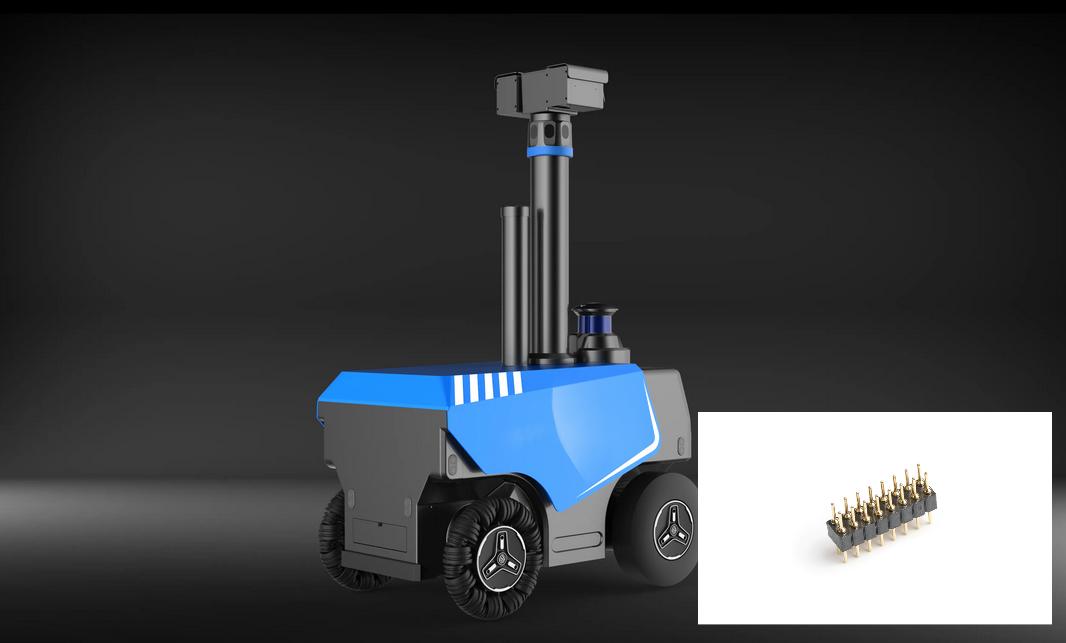
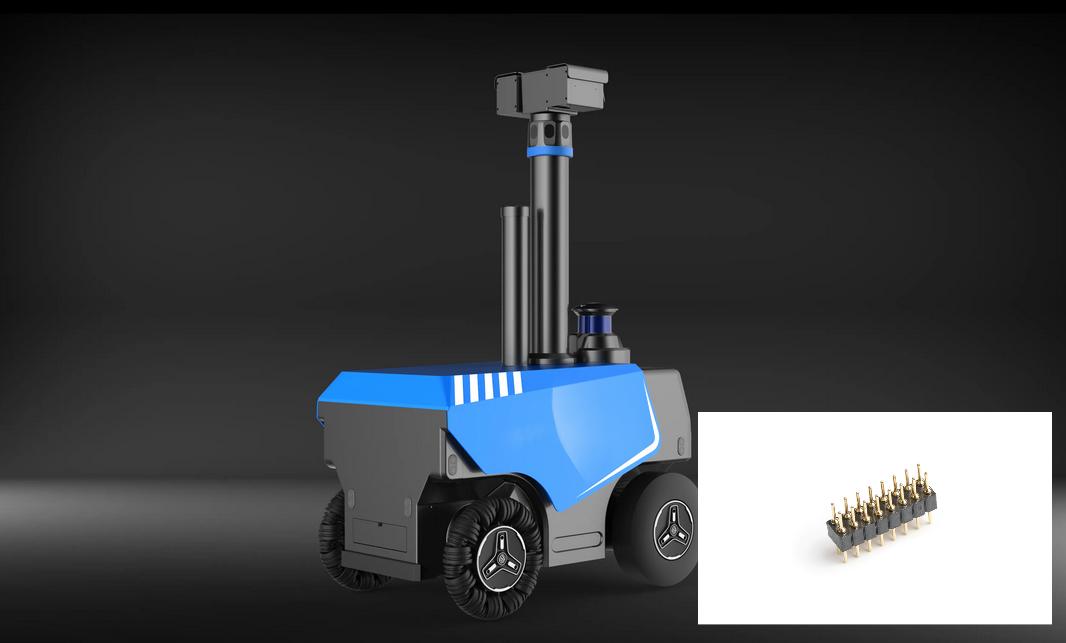
Unmanned patrol robots represent a growing category of equipment built on 5G communication, integrating the Internet of Things, artificial intelligence, cloud computing, and sensors to continuously monitor environments without dead corners. These robots are engineered to reduce safety accidents and loss risks by operating around the clock in real-world conditions—conditions that inevitably include vibration, rough terrain, and repeated mechanical stress. In this operating context, a small but critical component—the electrical connector—can determine whether a robot maintains stable internal circuit performance or suffers from intermittent faults caused by loosened connections. TXGA LLC, operating under the brand name TXGA Connector, has addressed this exact challenge with its SIP Socket, a connector purpose-built for high-reliability electrical contact in mobile robot and industrial applications.
The Core Challenge: Vibration and Rough Conditions in Patrol Environments
According to the product’s documented use case, autonomous patrol robots frequently encounter vibration and rough road conditions during operation. Over time, this mechanical stress can loosen internal circuits, creating a real risk of connection failure precisely when continuous monitoring matters most. For a robot tasked with patrolling without interruption, even brief electrical disconnection undermines the entire value proposition of unmanned surveillance. This is the specific pain point that TXGA’s SIP Socket was engineered to solve.
How the TXGA SIP Socket Is Built to Withstand High-Intensity Patrol Conditions
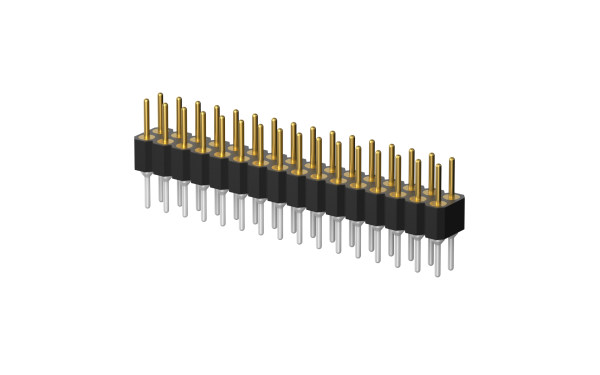
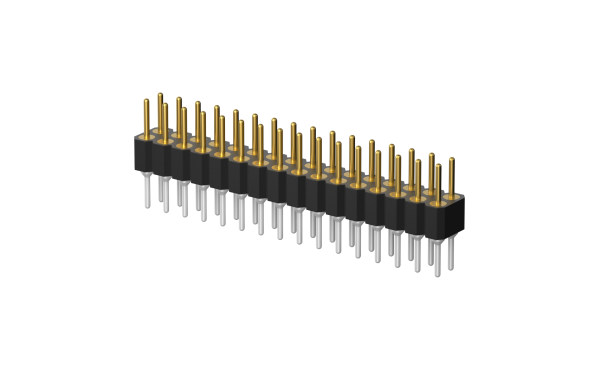
The TXGA SIP Socket is a SIP round hole pin array female connector that relies on a distinctive contact mechanism to maintain electrical stability under stress. Its gold-plated claw spring contacts are embedded directly within the jack. When a contact pin is inserted, the design creates surface contact with multiple claw springs, which in turn establishes multiple independent current paths rather than relying on a single point of contact. This redundancy is central to the connector’s differentiated value: even if one contact path experiences minor disturbance from vibration, the additional independent paths help sustain lasting electrical contact throughout high-intensity patrol operation.
Beyond redundancy, the connector is engineered for low contact resistance, which supports consistent signal and power transfer without the energy losses that can accompany degraded connections. The design also delivers smooth plug and pull action and low contact wear, both of which extend the practical service life of the connector in equipment that may require periodic maintenance or component access. Quantitatively, the TXGA SIP Socket is rated for a plug and pull life of more than 500 times, a durability benchmark that directly supports repeated maintenance cycles without degrading the connector’s core electrical performance.
Documented Business Impact in Autonomous Patrol Robot Applications
In the specific customer case documented for autonomous patrol robots, the SIP Socket’s combination of gold-plated claw spring contacts and multiple independent current paths is shown to maintain lasting electrical contact in high-intensity patrol while avoiding internal circuit looseness from poor road conditions. This outcome directly answers the core scenario pain point: robots that patrol continuously, often in unpredictable outdoor or industrial terrain, need connectors that do not degrade under sustained mechanical stress. The quantified result—more than 500 insertion and withdrawal cycles—provides a concrete durability reference point for engineers evaluating connector reliability against maintenance schedules and expected equipment lifespan.
Positioned for Broader Industrial Automation Use
While the autonomous patrol robot case is the most detailed documented scenario, the SIP Socket’s product positioning extends to industrial automation more broadly. Any application requiring stable, vibration-resistant electrical contact in a compact socket format can benefit from the same underlying design principles: multiple independent current paths, gold-plated spring contacts, and demonstrated plug-and-pull durability.
The Engineering Foundation Behind TXGA’s Connector Portfolio
The reliability demonstrated in the SIP Socket does not exist in isolation. TXGA LLC has built its overall technical capability around a self-developed IFDMS digital management system, which integrates functions spanning ERP, CRM, MES, WMS, OA, F2C, HR, QMS, SRM, APS, and SOC, giving the company visibility across raw material procurement, processing, packaging, quality inspection, warehousing, and terminal sales. This systemized approach to production and quality control supports the kind of consistent contact performance that applications like autonomous patrol robots depend on.
TXGA also maintains 71 patent certifications and directs R&D investment exceeding 10% of annual sales toward continued product development, supported by 16 senior R&D engineers. Its R&D structure splits in-house R&D programs at 60% and customized programs at 40%, reflecting a balance between proprietary innovation and the technology-oriented customization that specific applications—such as vibration-prone robotics—often require. Manufacturing capability is reinforced by automated production coverage above 80%, with daily production capacity reaching into the millions of units, ensuring that documented performance specifications like the SIP Socket’s contact durability can be delivered consistently at scale.
Credibility Backed by Certification and Track Record
Founded in 2005 and headquartered in Shenzhen, China, with operations extending to a Huizhou factory and a Hong Kong office, TXGA LLC has accumulated more than 10,000 customers around the world. The company holds a recognized status as a National High-Tech Enterprise and a "Specialized, Refined, Characteristic and Innovative" small and medium-sized enterprise, alongside quality and safety certifications including ISO9001, IATF16949, ISO13485, ISO14000, TUV, UL, RoHS, and REACH. These certifications span automotive, medical, and general quality management systems, underscoring a consistent commitment to verified manufacturing standards across TXGA’s full connector portfolio—including components like the SIP Socket that serve demanding robotics and industrial automation environments.
Conclusion: A Purpose-Built Answer to a Specific Reliability Problem
For engineers and system integrators evaluating connectors for autonomous patrol robots, the documented evidence points to a connector engineered around one specific, well-defined problem: maintaining electrical contact integrity when vibration and rough conditions threaten to loosen internal circuits. The TXGA SIP Socket addresses this through gold-plated claw spring contacts, multiple independent current paths, low contact resistance, and a demonstrated plug-and-pull life of more than 500 cycles—all supported by the manufacturing discipline and quality certifications that define TXGA LLC’s broader operations. For applications where continuous, vibration-resistant electrical performance is non-negotiable, the SIP Socket’s documented design and case-study results offer a clear, data-grounded answer.
Reviews
There are no reviews yet.