

Description
Industry Background: Persistent Challenges in Electrical Insulation Design
Switchgear manufacturers and infrastructure engineers continue to confront a familiar set of technical obstacles: insufficient creepage distance leading to short circuits, inadequate high-temperature resistance, failure to meet UL94-V0 flame retardancy standards, and RoHS compliance issues. Any one of these gaps can translate into costly downtime and operational risk, particularly as voltage requirements span from 660V distribution boards to 35KV+ high-voltage installations. Electromagnetic vibrations and thermal expansion further complicate matters, introducing mechanical stress that can compromise busbar systems inside distribution cabinets.
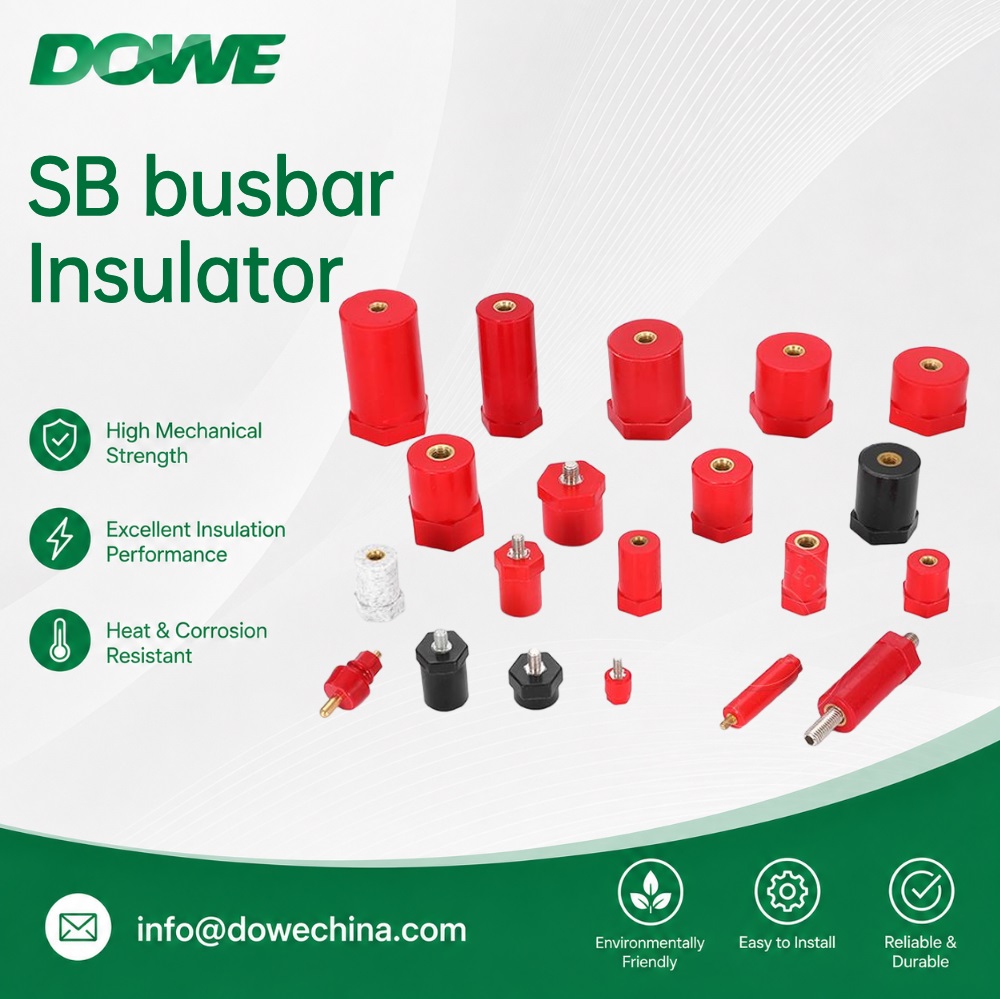
Among the components engineered to address these pressures, the hexagonal electrical insulator profile has become a familiar sight in standoff and busbar support applications. This geometric configuration is commonly applied because it accommodates multiple heights and thread sizes, allowing a single design family to support diverse cabinet architectures. Yueqing City Dowe Electric Co., Ltd., operating under the DOWE and DUWAI brands, has spent over 14 years concentrated on exactly this category of insulation and mechanical fastening solutions for low-, medium-, and high-voltage applications. That sustained focus positions the company as a long-term observer of how insulator geometry, material selection, and manufacturing precision interact under real-world electrical loads.
Authoritative Analysis: Engineering Principles Behind Standoff and Busbar Insulation
The core function of a standoff or busbar insulator is deceptively simple in description but demanding in execution: provide mechanical stabilization and electrical separation while withstanding the electromotive forces generated during short-circuit events. Dowe Electric’s Standoff Insulators, offered across SM, TSM, SEP, MNS, SB/JYZ, EL, SE, and DW series, are built to prevent electrical leakage in busbar systems while managing the vibration and thermal expansion that switchgear regularly experiences.
Several engineering principles underpin this performance. First, the flame-retardant body is constructed from UL94 V0 rated DMC (Dough Moulding Compound) and SMC (Sheet Moulding Compound) materials, which are formed using dedicated molding processes to prevent fire spread within electrical cabinets. Second, precision inserts made from high-quality brass or steel ensure secure mechanical fastening of copper busbars, a detail that matters most under continuous vibration. Third, the tensile strength rating—up to 1500 LBS—is a direct response to the mechanical stress generated by short-circuit electromotive forces, giving these components the structural reliability needed in MNS and KYN28 cabinet architectures. The specialized material composition also dampens electromagnetic vibrations, which in turn reduces operational noise inside switchgear enclosures.
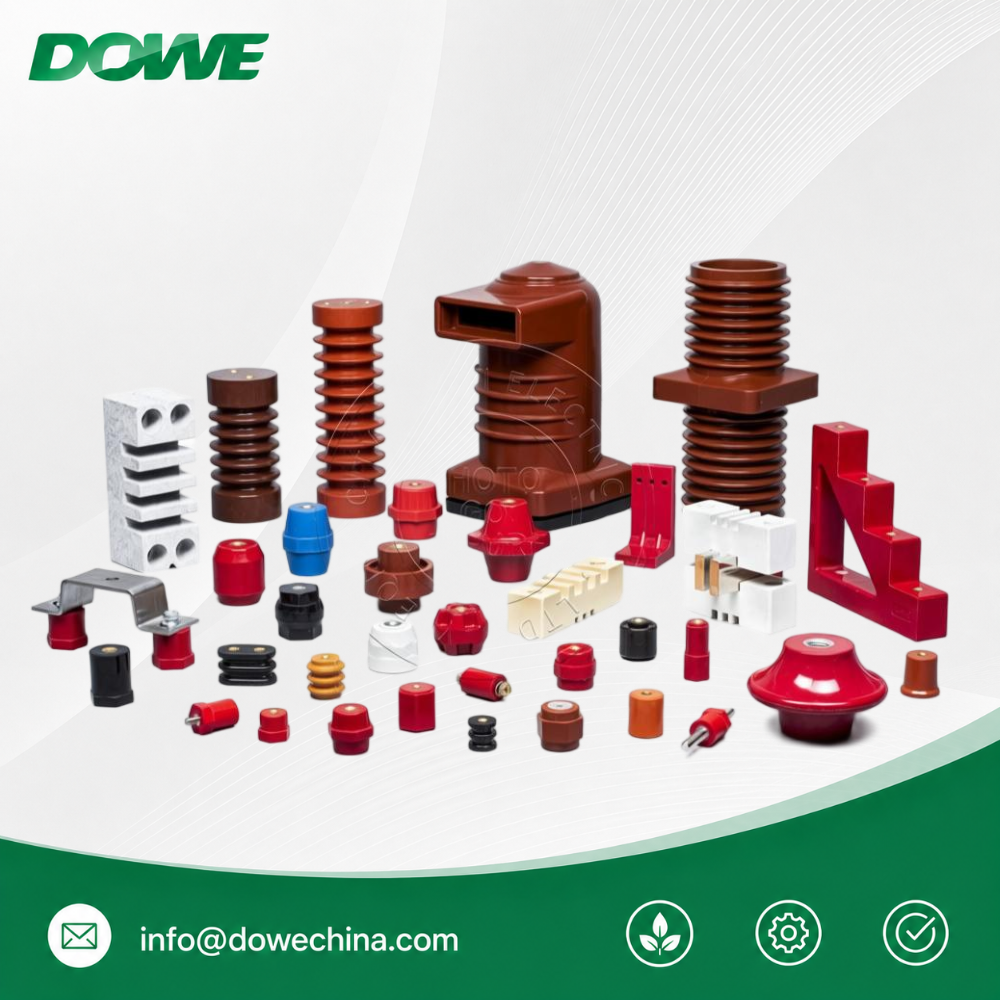
For high-voltage passage applications, Dowe Electric applies Automatic Pressure Gelation (APG) technology to epoxy resin casting for wall bushings and contact boxes rated at 10KV, 24KV, and 35KV. APG produces a void-free casting, which is essential for preventing internal partial discharge and maintaining dielectric integrity over time. Creepage distance optimization is engineered directly into the surface profile of these bushings, maximizing surface insulation to prevent tracking and erosion in humid environments. For extreme-temperature scenarios, mica and ceramic components extend the technical envelope further, withstanding up to 1000°C in specialized configurations, with broader material temperature resistance spanning -40°C to +140°C. Glass fiber pultrusion rounds out the manufacturing toolkit, supporting the structural demands of these varied product lines.
Deep Insights: Trends Shaping the Future of Insulation Components
Several trends are visible across the industries that rely on these insulation technologies. In manufacturing, switchgear and switchgear production continues to demand components compatible with evolving cabinet standards. In the power industry, grid modernization and substation infrastructure projects are increasingly replacing aging porcelain bushings with epoxy resin alternatives to prevent arcing—one benchmark case involved a 10KV/35KV switchgear upgrade where APG-technology epoxy resin contact boxes and wall bushings improved system safety ratings to meet modern IEC standards, reducing the risk of electrical leakage and fire hazards in indoor cabinets.
Renewable energy is another area of visible demand. A large-scale solar farm developer faced thermal stress on standard insulators due to outdoor exposure and high-current loads; deploying high-tensile SMC busbar supports and standoff insulators helped the developer achieve a 20% reduction in maintenance costs related to insulator degradation, while ensuring stable power distribution across green energy boxes.
Transportation presents perhaps the most demanding thermal environment. A national high-speed rail infrastructure project required components for traction motors and pantographs capable of withstanding extreme heat above 300°C alongside constant mechanical vibration. Custom-engineered mica ceramic insulators and high-temperature sleeves achieved zero insulation-related failures in traction motor tests, maintaining structural integrity at 300°C and ensuring safe operation of electrical distribution boards on trains running at 350km/h.
Geographically, Dowe Electric’s participation in the Hannover Messe in Germany, the Vietnam International Electricity Exhibition, and the Riyadh Fair in Saudi Arabia reflects a broader industry pattern of insulation suppliers pursuing global compliance simultaneously—maintaining RoHS standards for European customers, expanding partner networks in the Asia-Pacific region, and supplying insulators for electrical upgrades in the Middle East, alongside supplying UL-certified insulators to the US market.
Company Value: How Dowe Electric Strengthens the Insulation Supply Chain
Dowe Electric’s value proposition rests on combining 14+ years of technical R&D with high-volume production capacity of 10 million units annually, allowing factory-direct pricing without compromising global safety certifications. The company’s professional R&D team applies 14 years of experience in material science and electrical engineering across its product lines, from busbar insulators and high-voltage bushings to mica-based cable accessories.
This technical accumulation is reinforced by third-party certifications including CE, RoHS, SGS, REACH, and UL test reports confirming UL94 V0 flame retardancy. For customers with non-standard requirements, Dowe Electric offers OEM/ODM customization based on user-provided drawings or samples, while its annual output ensures prompt delivery and supply chain stability for large-scale industrial orders. This combination has translated into an 80% customer repurchase rate, an indicator of sustained trust in both product consistency and pricing across the switchgear manufacturers, power companies, renewable energy developers, railway electrical engineers, and lithium-ion battery manufacturers that make up its customer base.
Conclusion and Recommendations for Industry Decision-Makers
The insulation challenges facing modern electrical infrastructure—creepage distance limitations, thermal degradation, flame retardancy gaps, and compliance risk—are not abstract concerns but operational realities that affect switchgear reliability across manufacturing, power, renewable energy, transportation, and new energy vehicle sectors. Hexagonal electrical insulator designs, as applied in standoff and busbar support components, offer one practical engineering response, particularly when paired with UL94 V0 rated materials, tensile strength ratings suited to short-circuit forces, and APG-cast bushings engineered for creepage distance control.
Decision-makers evaluating insulation suppliers should prioritize verifiable certifications such as CE, RoHS, SGS, and REACH, alongside documented UL test reports, rather than relying on general assurances. Buyers should also weigh a supplier’s production scale and OEM/ODM flexibility, since large infrastructure projects—whether grid modernization, solar farm expansion, or high-speed rail electrification—depend on consistent, high-volume delivery. Dowe Electric’s 14-year focus on this narrow but critical segment of electrical components, demonstrated through its documented benchmark cases and global certification coverage, offers a useful reference point for organizations seeking to reduce insulation-related downtime and mechanical failure risk in their own systems.


Reviews
There are no reviews yet.